India -Africa Strategic Partnership Meet Convened at Bharat Electricity Summit
 DNA News Desk
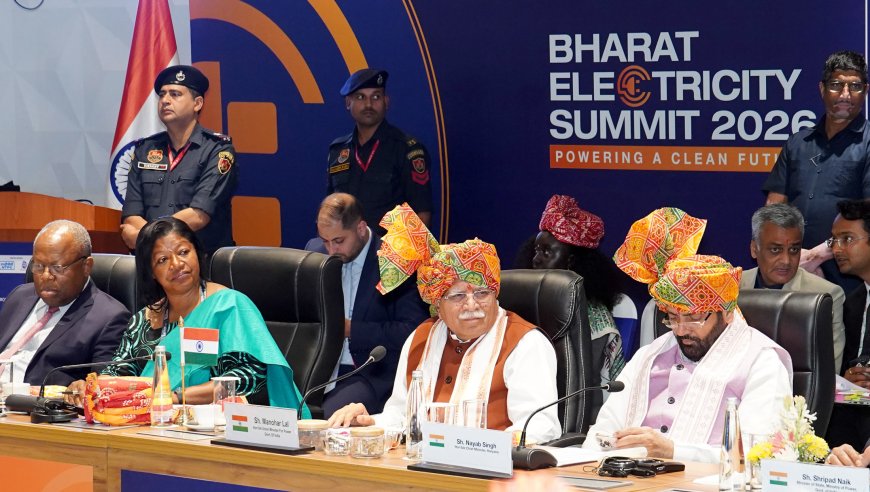
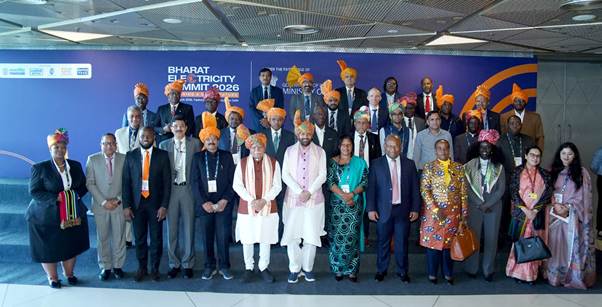
New Delhi :- India - Africa Strategic Partnership Meet was convened on the third day (21.3.2026) of the Bharat Electricity Summit 2026 .The meeting was chaired by Shri Manohar Lal, Union Minister for Power. meeting was attended by Shri Shripad Naik Minister of State for Power and New & Renewable Energy, Shri Nayab Singh Saini Chief Minister of Haryana, Dr Jean Mathanga Minister of Energy and Mining, Government of Malawi, Alain Ebobissé, CEO of Africa50, Ministers from several African nations, leaders from the African Union and Africa50, Ambassadors, High Commissioners, representatives from power utilities, financial institutions, development partners, and industry leaders.
The discussions reflected a clear and forward-looking vision that India and Africa would deepen their engagement through a structured and action-oriented partnership, focused on delivering tangible outcomes. The meeting reiterated that India and Africa would work closely in areas of renewable energy expansion, development of interconnected grid systems, advancement of energy storage and flexibility solutions, and capacity building through institutional strengthening. Emphasis was laid on leveraging India’s proven experience and Africa’s growing potential to ensure reliable, affordable, and sustainable energy access. Both sides also highlighted the importance of investment-led collaboration, technology transfer, and public-private partnerships, aiming to build an inclusive, equitable, and future-ready energy ecosystem that drives long-term socio-economic transformation.
Addressing the gathering, Shri Manohar Lal stated that power is crucial for driving economic growth, ensuring dignity, and unlocking opportunities, and highlighted the vision of One Sun, One World, One Grid as a transformative pathway for global energy connectivity.
The Minister extended a warm welcome to African partners and underscored the shared commitment to achieving reliable, affordable, and sustainable energy. He noted that India and Africa, representing nearly one-third of the global population, share common aspirations for inclusive, equitable, and future-ready development. Highlighting India’s journey from energy deficit to surplus and its rapid growth in renewable energy, he stated that these experiences offer practical and scalable models for Africa. He cited the collaboration between Africa50 and Power Grid Corporation of India Limited, including the Kenya transmission project, as a strong example of how innovative financing, technical expertise, and public-private partnerships can deliver resilient infrastructure.
Shri Manohar Lal outlined key areas of cooperation, including renewable energy expansion, grid modernization, energy storage and flexibility, and capacity building with institutional strengthening. Referring to initiatives such as the International Solar Alliance, he reaffirmed India’s commitment to deepening collaboration with Africa. He concluded by stating that India–Africa energy cooperation is not transactional but transformational, rooted in co-creation, and reiterated India’s commitment as a trusted partner in this shared journey.
Shri Shripad Naik emphasized that the India-Africa partnership must move from intent to action, Energy access is reframed as a driver of economic transformation, not just infrastructure delivery. He underscored the shared commitment to ensuring reliable, affordable, and sustainable energy for all, as a foundation for inclusive growth. He further noted that this partnership is guided by a vision that is inclusive, equitable, and futuristic, aimed at creating long-term impact and empowering communities across both India and Africa.
Haryana Chief Minister Shri Nayab Singh Saini affirmed Haryana’s commitment to sustainable good governance, emphasizing effective irrigation water management as a cornerstone of progress. He said that partnership, not dominance; cooperation, not competition should be the shared values for India and Africa. He said that partnership between Haryana and African nations is built on pillars of energy management, digital governance, and agricultural cooperation.
Offering a global investment perspective, Mr. Alain Ebobissé, CEO, Africa50, stated that it is not aid that we are seeking, we are seeking investment for impact and return. He highlighted that Africa is increasingly focusing on bankable project development, transmission expansion, and private capital mobilisation, supported by integrated planning and new investment frameworks.
Dr Jean Mathanga said that there is a need to bolster sustainable development and long-term economic growth through renewable energy initiatives, including low-cost solar solutions for rural and remote areas, wind energy projects, and a robust energy transition bearing the Indian footprint. She called for prioritizing electrification, transmission infrastructure development, and cooperation on smart metering, grids, and microgrids, aligning seamlessly with Africa's agenda for an inclusive power system. These efforts promise multifaceted benefits such as enhanced energy security, access to minerals, and expanded markets; for Africa, they deliver affordable technology and infrastructure, improved grid reliability, electrification, and enduring partnerships, while complementing India's technological strengths with Africa's vast resource potential to build secure and inclusive power systems.
India–Africa Strategic Partnership is cantered on building a collaborative and mutually beneficial framework for sustainable growth, with a strong emphasis on energy, infrastructure, and capacity building. It leverages India’s experience and capabilities as a model to support Africa’s evolving development trajectory, particularly in electrification, renewable energy, and grid connectivity. Through institutions like Africa50 and initiatives such as the International Solar Alliance, the partnership promotes investment, technology transfer, and scalable solutions like solar rooftops, hydro-solar integration, mini grids and decentralized energy systems. It also focuses on policy frameworks, public-private partnerships, and human resource development to accelerate inclusive growth. Ultimately, the partnership aims to bridge energy access gaps, enhance regional integration, and create long-term transformative impact across African nations.